Keep me updated!
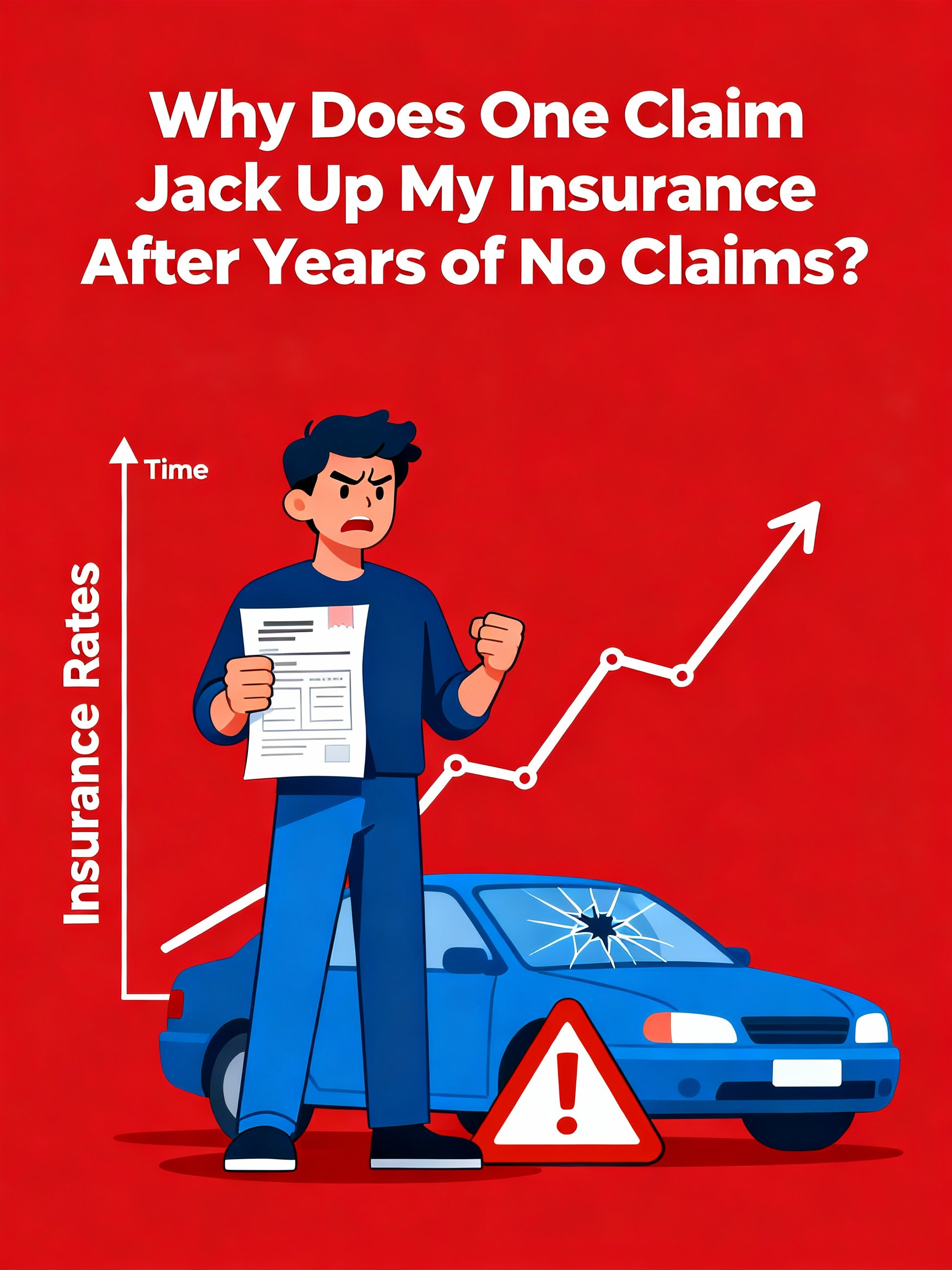
Even loyal, long-term customers can be shocked when their insurance premium increases after filing a single claim. You may feel you’ve been a great customer for years — even decades — paying your premium faithfully without ever asking for anything in return. Then the moment you finally need help, not only do you experience a loss, but your renewal shows a higher price.
Why does this happen? Let’s break it down with a little Insurance 101.
How Applying for Insurance Is Like Getting Hired
Think back to how you got your job. You sent in a résumé, interviewed and were hired based on what you brought to the table at that moment. Your employer evaluated your qualifications and made you an offer — a salary you agreed to.
Insurance works the same way.
When you apply for auto insurance, you fill out an application providing details about yourself and your vehicle. That application is the insurer’s version of your résumé — a snapshot in time. After reviewing your information, the insurance company decides whether to take on the risk. If so, they offer you a premium, and you agree to the contract.
At that point, both sides have reached an agreement:
You pay the premium, and the insurer provides coverage.
Renewal Time Is Like a Performance Review
Fast-forward one year.
At work, you sit down for a performance review. You’ve been reliable, respectful, productive — so you ask for a raise. Your employer looks at your performance and thinks, “Yep, solid employee. A raise is appropriate.” Your salary goes up.
Insurance renewals follow the same pattern.
When your auto policy comes up for renewal, the insurer checks your driving record:
Any moving violations?
Any accidents?
Any changes in risk?
If all looks good, they renew your policy. They may adjust your premium slightly due to increased repair costs or inflation, but in theory, you’re rewarded for being a low-risk driver — just like a well-performing employee.
Keep me updated!
Now Let’s Jump Forward 10 Years…
For a decade, things have been smooth at work — good performance reviews, reasonable raises, no major issues.
Then one year, something happens. You make a costly mistake with a major client. You also get into a heated argument with a co-worker, and HR steps in. At your annual review, your employer has to consider who you are right now — not who you were 5 or 10 years ago.
No matter how loyal you’ve been, the company evaluates the employee you are today.
You may keep your job, but a raise? Probably not.
The Same Logic Applies to Your Auto Insurance
Imagine you’ve been with your insurer for years, never filed a claim and kept a clean record. Then last year, two things happened:
You got a speeding ticket after a heated argument.
You had a small fender bender where you rear-ended someone.
These events change your risk profile. From the insurer’s perspective, this “new you” is not the same as the “you” they priced a decade ago.
You are now:
A driver with an at-fault accident
A driver with a recent moving violation
Is it fair for you to pay the same rate as a driver who didn’t have any incidents last year?
Insurance premiums aren’t based on who you were — they’re based on who you are right now, statistically speaking.
Why Loyalty Doesn’t Override Risk
It’s tempting to say:
“But I’ve been a customer for 10, 20, even 30 years with no issues!”
And that loyalty absolutely helped keep your rates lower while you remained low-risk. But loyalty does not erase the financial reality of:
Increased likelihood of another accident
A demonstrated pattern of risky driving
The actual cost of the accident you caused
Insurance pricing isn’t personal. It’s statistical.
Just as an employer evaluates your performance every year, insurers evaluate your current level of risk at each renewal — not your long-term history.
Bottom Line: You’re Paying for the Risk You Present Today
It’s frustrating, absolutely. But now you know why a premium increase often follows a claim or a ticket — even if you’ve been a stellar customer for years.
You’re not being punished.
You’re not being ignored.
You’re not being taken for granted.
You’re simply being priced as the driver you are right now — just like employers adjust compensation based on who you are today, not who you used to be.
Want to learn more about insurance? Visit KarlSusman.com.
Keep me updated!